The impact extends beyond immediate medical care. As Saudi Arabia pursues its ambitious Vision 2030 goals for healthcare equity, RACS programs represent a crucial component in building a more inclusive and accessible healthcare system. This article explores how these specialized clinical services are breaking down barriers and creating new possibilities for healthcare delivery across the Kingdom’s diverse geography.
Core Components of Remote Area Clinic Services (RACS)
Remote Area Clinic Services represent a comprehensive approach to healthcare delivery in challenging environments. These services combine physical infrastructure, skilled personnel, emergency capabilities, and digital technologies to create fully functional medical facilities in locations where traditional healthcare access is limited or nonexistent.
Turnkey Clinic Setups
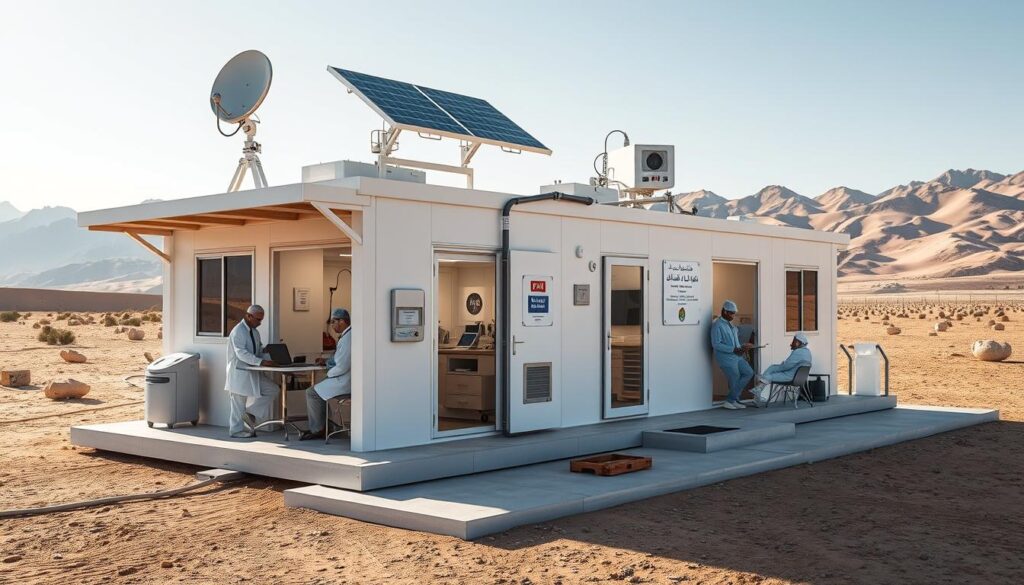
At the heart of RACS are the turnkey clinic facilities—pre-fabricated, modular units designed for rapid deployment and immediate functionality. These clinics arrive complete with examination rooms, laboratory spaces, pharmacy sections, and patient waiting areas. The modular design allows for customization based on specific community needs and geographical constraints.
Each clinic is engineered to withstand Saudi Arabia’s challenging climate conditions, with robust cooling systems, dust protection, and independent power generation capabilities. This self-sufficiency is crucial for maintaining continuous operations in remote locations where infrastructure support may be inconsistent.
Want to learn how turnkey clinic setups can be customized for your region’s specific needs?

Interior of a Remote Area Clinic showing modern medical equipment and treatment areas
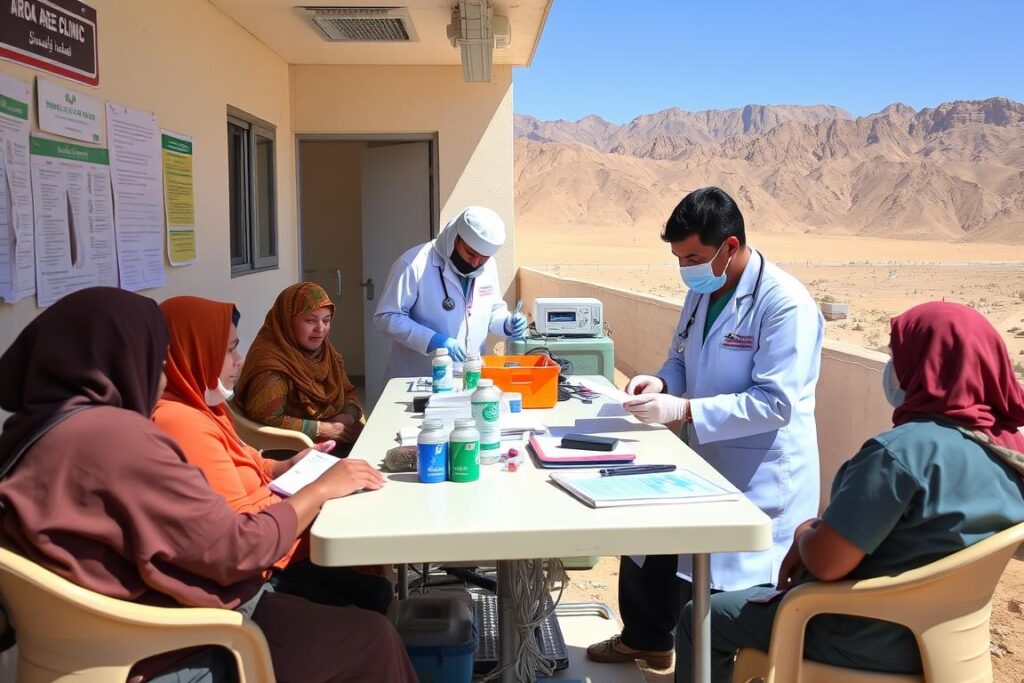
Medical professionals providing care at a Remote Area Clinic in a mountainous Saudi region
On-Site Doctors & Certified Life Support
RACS facilities are staffed with qualified medical professionals specifically trained for remote healthcare delivery. These teams typically include physicians, nurses, laboratory technicians, and community health workers who understand both the medical and cultural aspects of serving diverse Saudi communities.
All medical personnel receive specialized training in emergency medicine and life support techniques, ensuring they can handle critical situations with limited external support. This training includes Advanced Cardiac Life Support (ACLS), Basic Life Support (BLS), and trauma management protocols adapted for remote settings.
Ambulance Readiness
Each RACS facility maintains 24/7 ambulance services equipped with advanced life support capabilities. These vehicles serve dual purposes: providing emergency response within the community and facilitating critical patient transfers to larger medical centers when necessary.
The ambulances are specially modified for Saudi Arabia’s diverse terrain, capable of navigating desert conditions, mountainous regions, and unpaved roads. Each vehicle contains essential monitoring equipment, emergency medications, and communication systems to coordinate with receiving hospitals during transfers.

A specialized ambulance for Remote Area Clinic Services navigating challenging Saudi terrain
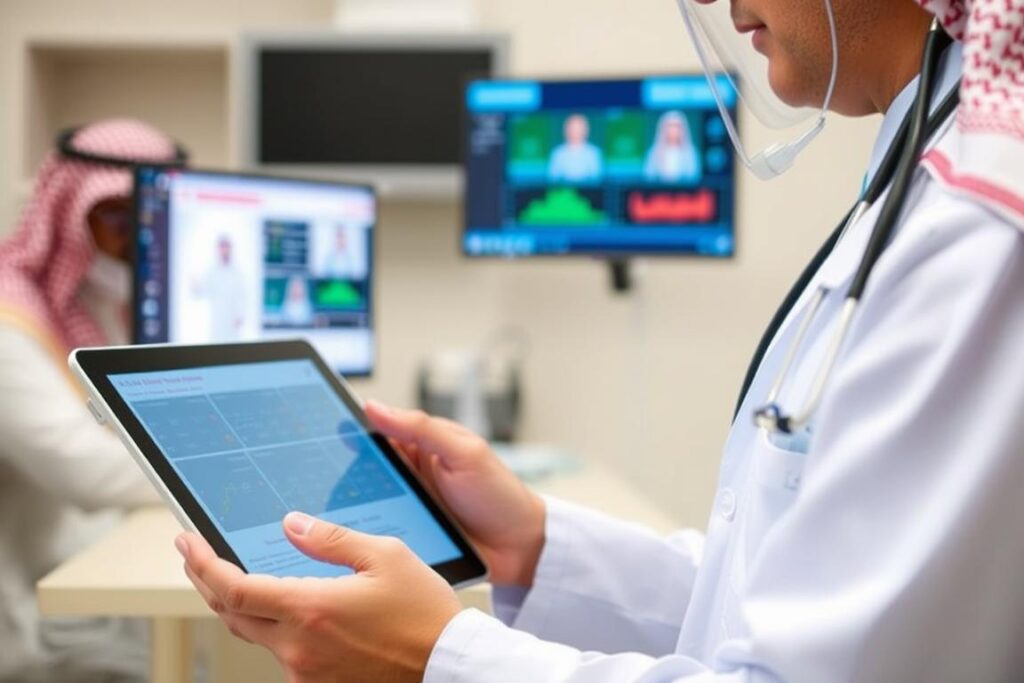
Healthcare professional using cloud-based Health Management System at a Remote Area Clinic
Cloud-Based HMS
Digital connectivity forms the backbone of effective RACS operations. Each facility utilizes cloud-based Health Management Systems (HMS) that enable real-time patient data management, inventory tracking, and telemedicine capabilities. These systems operate on specialized satellite connections, ensuring functionality even in areas with limited telecommunications infrastructure.
The HMS platforms facilitate seamless consultation with specialists located in urban centers, allowing for remote diagnosis and treatment guidance. This digital bridge significantly expands the range of medical services available at RACS facilities without requiring physical specialist presence.
Interested in how cloud-based HMS can transform healthcare delivery in your region?
Real-World Impact: RACS in Action
The theoretical benefits of Remote Area Clinic Services become tangible when examining their implementation across Saudi Arabia. Several ongoing projects demonstrate how these services are addressing specific healthcare challenges in diverse geographical settings.
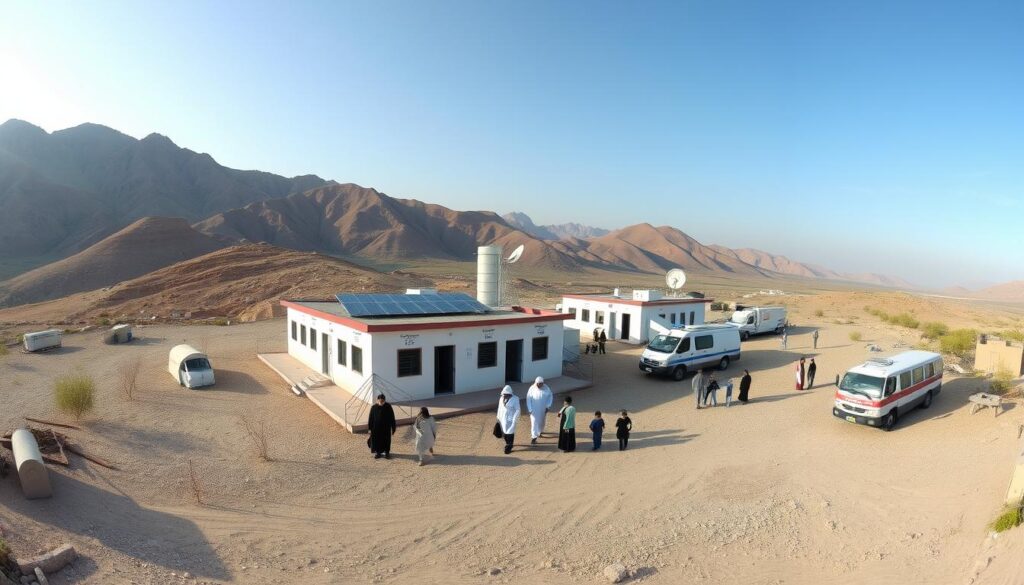
Remote Area Clinic Services facility serving communities in the Asir Mountains region
Asir Mountains Healthcare Initiative
In the southwestern Asir region, RACS facilities serve communities scattered across challenging mountainous terrain. These clinics provide year-round access to primary care, maternal health services, and emergency stabilization for approximately 15,000 residents across 23 villages.
The program has reduced emergency medical evacuation needs by 63% since implementation, as many conditions can now be treated locally. Maternal health outcomes have significantly improved, with prenatal care participation increasing from 41% to 87% among expectant mothers.
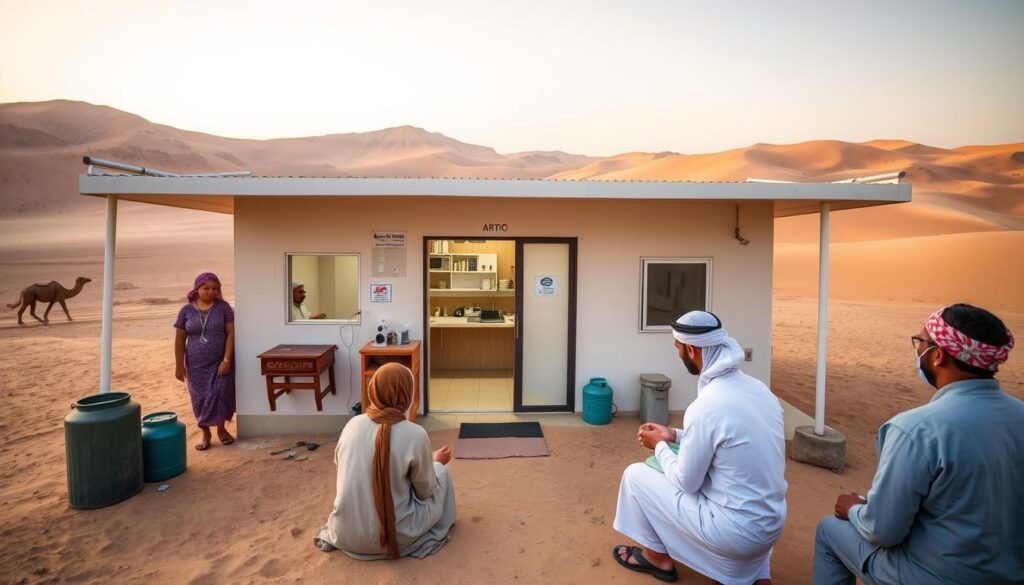
Remote Area Clinic providing healthcare services to Bedouin communities in northern Saudi Arabia
Northern Borders Bedouin Outreach
Serving semi-nomadic Bedouin communities in Saudi Arabia’s northern regions, this RACS network combines fixed clinics with mobile medical units. The program reaches approximately 12,000 people who previously had limited or inconsistent access to healthcare services.
A key innovation is the implementation of scheduled clinic rotations that align with traditional Bedouin movement patterns, ensuring continuity of care despite the mobile nature of these communities. Vaccination rates among children have increased from 54% to 91% since the program’s inception.
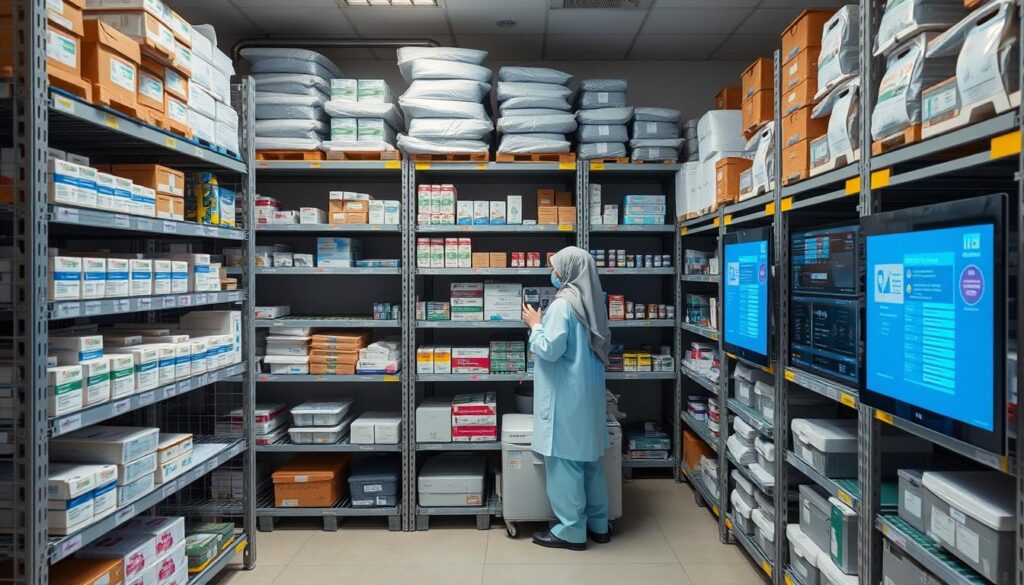
Advanced inventory management system at a Remote Area Clinic Services facility in Saudi Arabia
Advanced Inventory Management
A critical component across all RACS implementations is the sophisticated inventory management system that ensures consistent supply availability. Using predictive analytics and consumption tracking, these systems maintain optimal stock levels of medications, consumables, and critical supplies.
The technology integrates with central distribution hubs in major cities, automatically triggering resupply orders before shortages occur. This proactive approach has reduced stock-outs of essential medications by 94% compared to traditional supply chain methods previously used in remote healthcare settings.
“The implementation of Remote Area Clinic Services has fundamentally changed how we approach healthcare equity in Saudi Arabia. We’re no longer asking if quality care can reach remote communities, but rather how quickly we can scale these proven solutions.”
Alignment with Saudi Vision 2030 Healthcare Goals
Remote Area Clinic Services represent more than just a healthcare delivery mechanism—they embody core principles of Saudi Arabia’s Vision 2030 transformation plan. The strategic alignment between RACS initiatives and national development goals creates powerful synergies that benefit both individual communities and the broader healthcare ecosystem.
Equitable Healthcare Access
Vision 2030 explicitly aims to provide equitable healthcare access to all Saudi citizens regardless of geographic location. RACS directly addresses this goal by establishing standardized care capabilities in regions previously underserved by traditional healthcare infrastructure.
By bringing consistent, quality healthcare services to remote communities, RACS helps reduce the urban-rural healthcare divide that has historically characterized healthcare distribution in the Kingdom. This alignment with national equity goals has facilitated strong governmental support for RACS expansion initiatives.
Workforce Development
Another key dimension of Vision 2030 is developing Saudi Arabia’s healthcare workforce. RACS programs create employment opportunities for Saudi medical professionals in diverse settings, expanding career pathways beyond traditional urban hospital environments.
Each RACS facility typically employs 8-15 healthcare workers, many recruited from local communities. This localized employment approach not only creates jobs but also builds healthcare capacity within remote regions, as staff receive specialized training and professional development opportunities.
Technology Integration
Vision 2030 emphasizes technological advancement across all sectors, including healthcare. RACS exemplifies this priority through its integration of telemedicine, digital health records, and remote monitoring capabilities that extend specialized care to previously inaccessible areas.
The digital infrastructure developed for RACS operations contributes to Saudi Arabia’s broader healthcare digitization goals, creating interoperable systems that connect remote facilities with the national healthcare network.
Economic Diversification
Beyond direct healthcare outcomes, RACS initiatives support Vision 2030’s economic diversification objectives. The development, manufacturing, and maintenance of specialized clinic equipment creates opportunities for Saudi businesses in the medical technology sector.
Several Saudi companies have emerged as specialists in remote healthcare solutions, developing innovations that are now being exported to other countries with similar geographic challenges.
Partner with Us on Vision 2030 Healthcare Initiatives
Discover how your organization can participate in expanding Remote Area Clinic Services across Saudi Arabia, contributing to national healthcare goals while addressing critical community needs.
Addressing Implementation Challenges
While Remote Area Clinic Services offer transformative healthcare solutions, their implementation comes with unique challenges that require thoughtful strategies and continuous adaptation.
Challenges Successfully Addressed
- Climate adaptation through specialized facility design and equipment modifications
- Cultural integration by recruiting and training staff from local communities
- Connectivity limitations overcome through satellite-based communications systems
- Supply chain disruptions mitigated via predictive inventory management
- Staff retention improved through enhanced living quarters and rotation schedules
Ongoing Implementation Challenges
- Initial capital costs requiring substantial investment or public-private partnerships
- Specialized training needs for healthcare professionals in remote settings
- Maintenance logistics for sophisticated medical equipment in harsh environments
- Balancing standardized protocols with community-specific healthcare needs
- Integrating traditional healing practices with modern medical approaches
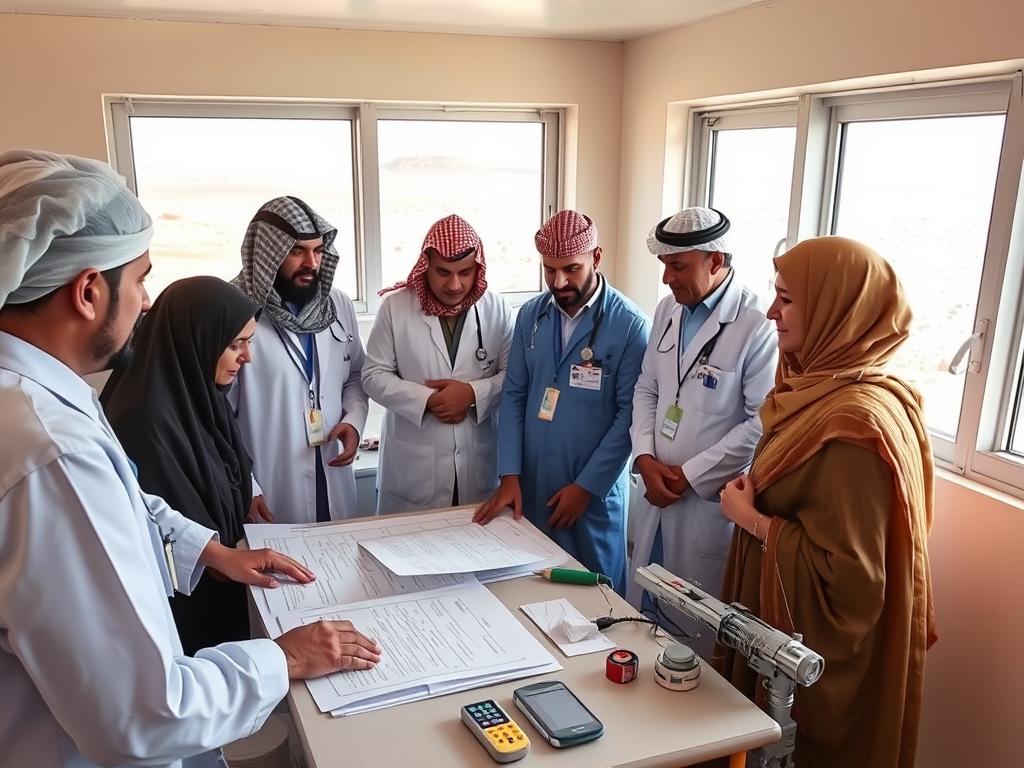
Healthcare professionals addressing implementation challenges at a Remote Area Clinic in Saudi Arabia
The successful implementation of RACS requires a collaborative approach involving healthcare administrators, technology providers, community leaders, and government agencies. Organizations considering RACS deployment should conduct thorough feasibility studies and community needs assessments to develop tailored solutions that address these challenges proactively.
Need assistance with overcoming implementation challenges for your remote healthcare initiative?
Future Directions for Remote Area Clinic Services

Future technologies being integrated into Remote Area Clinic Services in Saudi Arabia
As Remote Area Clinic Services continue to evolve in Saudi Arabia, several emerging trends and innovations promise to further enhance their effectiveness and reach. These developments represent the next frontier in remote healthcare delivery.
AI-Enhanced Diagnostics
Artificial intelligence systems are being integrated into RACS facilities to support diagnostic decision-making, particularly in specialties with workforce shortages. These systems analyze patient data, medical images, and test results to provide diagnostic suggestions that help on-site clinicians deliver more accurate care.
Drone-Based Supply Delivery
Experimental programs are testing the use of specialized medical drones to deliver urgent medications, blood products, and small medical supplies to RACS facilities. These autonomous delivery systems promise to reduce critical supply delivery times from days to hours in the most remote locations.
Renewable Energy Integration
Next-generation RACS facilities are incorporating enhanced renewable energy systems, including high-efficiency solar arrays and energy storage solutions. These advancements aim to make remote clinics completely energy independent, eliminating reliance on fuel deliveries for power generation.
These innovations represent just a fraction of the ongoing development in remote healthcare delivery. As technology continues to advance and implementation experience grows, Remote Area Clinic Services will likely become even more capable and cost-effective, further expanding their impact across Saudi Arabia’s diverse geograpic
Conclusion: Healthcare Without Borders
The success of RACS implementations across the Kingdom demonstrates that geographic isolation no longer needs to be a barrier to quality healthcare access. Through thoughtful integration of physical infrastructure, skilled personnel, emergency capabilities, and digital technologies, these services are creating a more equitable healthcare landscape aligned with Vision 2030 objectives.
As Remote Area Clinic Services continue to evolve and expand, they offer a powerful model for how innovative approaches can overcome seemingly intractable healthcare challenges. The future of healthcare in Saudi Arabia’s remote regions looks increasingly bright, with RACS playing a central role in ensuring that quality care reaches every citizen, regardless of location.
Ready to Transform Healthcare Access in Your Region?
Contact our team today to explore how Remote Area Clinic Services can be implemented to meet your community’s specific healthcare needs.